

For many businesses, a brand ambassador program can be a fruitful way to reach new audiences, attract customers and boost the bottom line. By formalizing an ambassador job description — and communicating exactly how ambassadors boost brand awareness across multiple social media platforms — marketers can turn real people with authentic voices into powerful engines of word-of-mouth marketing. But how does brand ambassadorship work, and what is a brand ambassador, anyway?
Here’s what you need to know about weaving this popular promotional tactic into your company’s overall marketing strategy, elevating your employer brand and creating trusted recommendations that resonate with customers, followers and fans.
What is a Brand Ambassador — and Who Can Be One?
Working in partnership with an organization, a brand ambassador is someone who represents and promotes that business’s brand to various audiences. This brand ambassador definition highlights the core function: They represent the brand online and off, embody the company story and help audiences experience the brand in an authentic way. Their positive spokespersonship is intended to boost brand awareness, strengthen brand marketing efforts and help convert new customers. Additionally, they’re typically rewarded in some way for their efforts, which means brand ambassadors receive perks ranging from free products to appearance fees.
As Courtney Karpiej, Associate Director, Social Media, explains, “A brand ambassador is more than just a face for your company. They’re an extension of your brand’s voice and values, building genuine connections with audiences across social channels and in real-world interactions.”
Brands can work with many different types of brand ambassadors, depending on the level of exposure they’re looking for and the budget they have to spend on this type of program. Successful brand ambassador programs often include a mix of ambassadors, influencers and even employer brand ambassadors — each one carefully selected to reinforce your company brand, values and culture. Let’s look at just how varied the brand ambassadorship umbrella can be.
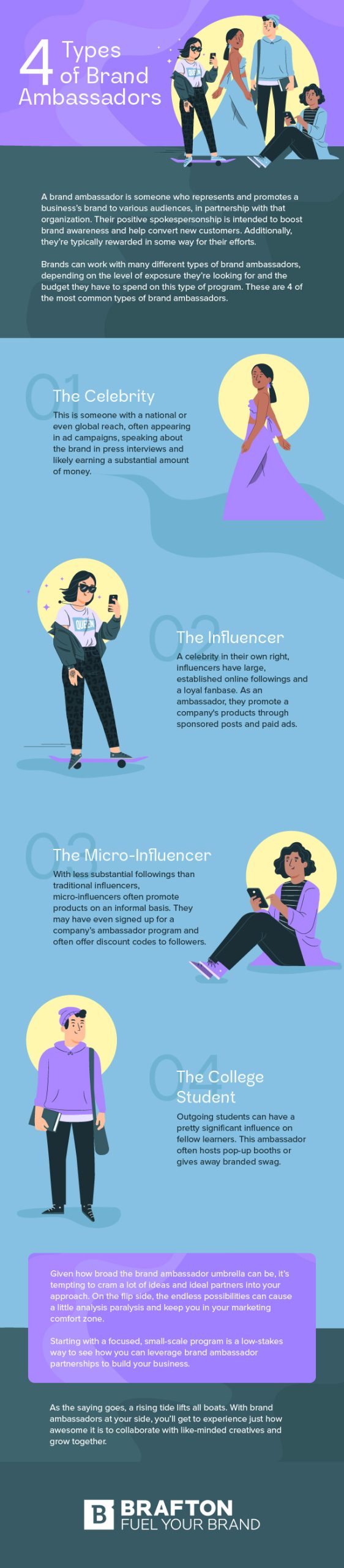
The Celebrity
- Serves as a spokesmodel and “the face of” a company, showcasing how to represent brand values at the highest level.
- Reaches a national or global audience, instantly increasing brand awareness among millions.
- Appears in ad campaigns across print and digital media and attends promotional events that tell the brand story.
- Speaks about their brand partnership in interviews with the press, amplifying the message across mass-reach media platforms.
- Earns substantial pay for taking on this role and operates under a formal agreement with the brand that outlines clear responsibilities and duties.

One of the many real-life celebrity ambassadors in the beauty world is Maye Musk (long-time model and mom to Elon). Signed on at age 69, she became CoverGirl’s oldest spokesmodel and the face of the Simply Ageless line.
The Influencer
- Promotes the company’s products through sponsored posts, and may also run paid ads on behalf of the brand, leveraging highly engaged social media accounts.
- Reaches a large audience, with 10,000 to 1 million or more followers, delivering trusted recommendations to customers, followers and fans who already consume their content daily.
- Operates based on a formal agreement with the brand that details the ambassador job scope and deliverables.
- Earns money, free or discounted products and additional social media exposure for their efforts.
Rosie, the lifestyle blogger and social media influencer behind The Londoner, occasionally publishes sponsored content through her partnership with Bobbi Brown. In the above post, captioned as an “ad,” she promoted a lipstick shade and co-hosted a giveaway to further promote brand reach.
Subscribe to
The Content Marketer
Get weekly insights, advice and opinions about all things digital marketing.
Thanks for subscribing! Keep an eye out for a Welcome email from us shortly. If you don’t see it come through, check your spam folder and mark the email as “not spam.”
The Micro-Influencer
- Promotes a favorite brand on social media on an informal basis, often via niche social channels where engagement is high.
- Reaches a more modestly sized audience of fewer than 10,000 followers yet can still represent company values credibly.
- Offers followers a referral code customers can apply toward an online order, helping the brand track word-of-mouth marketing performance.
- Earns discounts, free products and occasional social media exposure through this partnership.
- May have signed up online to join the brand’s ambassador program, demonstrating the accessibility of many brand ambassador jobs.
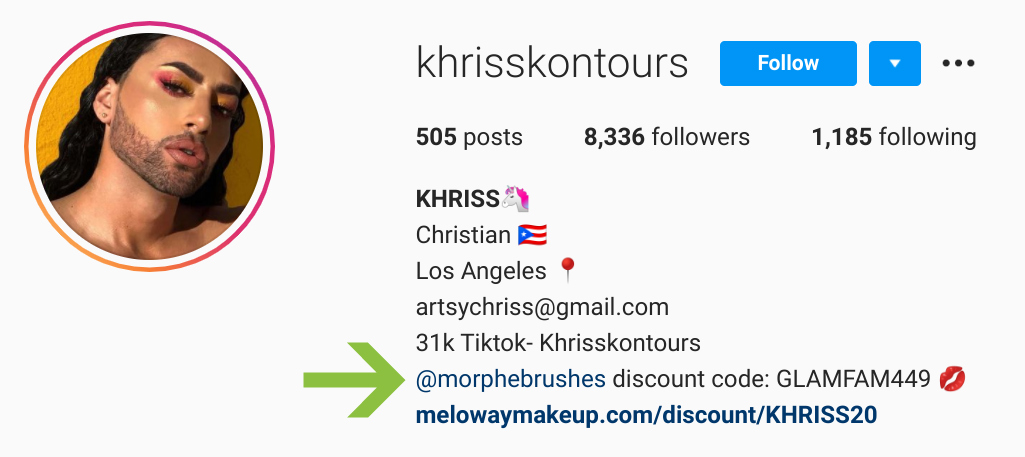
On Instagram, @khrisscontours serves as a brand ambassador for Morphe by tagging their products and giving followers a discount code, GLAMFAM449. The company can use this specific code to track Khriss’s bottom-line impact.
The College Student
- Spreads the word to fellow students, representing the brand on campus and at local events.
- Passes out branded swag and hosts pop-up booths on campus, creating in-person experience brand moments.
- Considers this as a part-time brand ambassador job and has an employment agreement with the brand.
- Earns a modest wage for their work, and may also have access to discounts and free merchandise.

As an example, Sephora partners with students like Amaris Gonzalez through the Sephora College Ambassador network. Amaris hosted an event table to raise awareness about the Sephora Collection brand and distribute samples to fellow students at Syracuse University.
Ambassadors, Advocates and Influencers, Oh My! (But Really, What’s The Difference?)
As you can see based on the four examples above, the answer to “what is a brand ambassador?” can vary from one situation to another.
Depending on which type of ambassador your company partners with, you will allocate a different budget, put in a varying amount of effort and reach a different audience.
Since the brand ambassador category is relatively broad, it’s worth noting how it relates to other types of influencers and advocates. In some cases, your partnership and marketing strategy might differ — especially when you’re balancing influencer marketing with formal brand ambassador programs designed for longer-term relationships.
Brand Ambassador vs. Influencer
Since we already took a look at how mega- and micro-influencers can serve as brand ambassadors, it’s clear that there’s a connection between these two terms. But an influencer marketing strategy will differ from a brand ambassador program in a few subtle ways.
Influencers have a sizable following and are actively building and maintaining their own personal branding. They may be particular about whom they partner with and will typically lead the way in terms of creating content. After all, promoting another brand cannot take away from their own carefully crafted image and message. Influencers see partnerships as a way to build personal brand credibility while adding value to their audiences.
As Karpiej notes, “Influencers and brand ambassadors both have the power to sway opinions, but ambassadors are often more deeply integrated into a brand’s culture and long-term goals, making their advocacy feel more authentic and sustainable.”
For instance, in the above post, cognac label Courvoisier partnered with blogger and social media influencer Signed, Blake to promote a specific values-driven campaign. Blake created the content to appeal to her followers and align with her overall aesthetic. She’s not directly selling the product. Instead, she’s talking about her own beliefs and showcasing an aspirational lifestyle that Courvoisier fits right into.
An endorsement from a beloved influencer can earn a lesser-known brand a lot of street cred, which is why brands pitch their partnership ideas to prominent influencers. However, chances are, those influencers already partner with other brands. This makes teaming up with a highly influential personality expensive and competitive.
Instead, businesses with a smaller influencer marketing budget often prefer to enlist micro-influencers as brand ambassadors. The audience is smaller and the stakes are lower with these relationships. Plus, they give both parties the opportunity to grow together.
Some micro-influencers, college ambassadors, street team members and similar individuals will actually approach brands they love and sign up for ambassador programs. This stamp of approval from a well-known brand is a feather in the cap of an emerging professional or aspiring authority.
Generally, an influencer marketing campaign will be a custom-made project. It may only last for the duration of one product-specific marketing campaign, or it could last for years. But a pre-built brand ambassador program can serve as a one-size-fits-all solution for long-term partnerships. The latter provides a framework the company can use to partner with a range of ambassadors.
And, in terms of the actual influence being wielded, think of it this way:
- Companies work with prominent influencers to boost their business’s brand.
- Brand ambassadors (who don’t have A-list status) partner with companies to amplify their own personal brand.
Brand Ambassador vs. Brand Advocate
Brand ambassadorship and brand advocacy are similar in that both involve people who shed a positive light on a company. However, brand advocates are usually enthusiastic, engaged fans rather than paid partners. You can think of advocacy marketing as word-of-mouth marketing in the digital age.
For instance, a B2B business might turn satisfied clients into brand advocates via case studies. Unlike an ambassador, a client-turned-advocate may not spread the word about the business to their own network. Instead, the brand will gather positive testimonials, produce content and promote it to their own audiences.

In a B2C context, a brand advocate might tag their favorite company in a Facebook post about how happy they are after purchasing a new product. Or they might alert their Twitter followers about an upcoming launch or event hosted by the brand. There’s no formal partnership here, but this type of user-generated content can have a positive impact for the brand.
Companies may use their social media channels to encourage brand advocacy through calls-to-action. Any customer who responds by using a branded hashtag, writing a review or sharing their own stories can be a brand advocate.

Brand Ambassador vs. Employee Advocate
A brand advocate doesn’t necessarily need to be an external party. Employee advocates are brand advocates who promote your business from within the organization.
Of course, your target audience knows that an employee advocate has a different perspective than an outside brand ambassador, given their more intimate relationship with the company. Depending on their role, it might also be their job responsibility to present their employer in a flattering light.

Despite this bias, it’s still valuable to take advantage of employee support and convert employee advocacy into content marketing ROI.
You might encourage employees to re-share your company’s LinkedIn posts with their network or involve team members in video content.
Or, in the case of Les Mills, staff members will commonly participate in social media content of all types — from footage of classes to more personal, interactive posts. This not only builds upon strong employee advocacy, but may also kill two birds with one stone by contributing to the staff member’s individual followings. Notably, as various Les Mills staff members post fitness — Les Mills class — related content, the mutual posting between company and employee creates an advocacy ecosystem of sorts, further enhancing Les Mills’s reputability in the fitness space.
Employee advocates can be thought leaders in the industry or just highly engaged staff members. Either way, businesses can use this form of advocacy to tap into the workforce’s spheres of influence and brand loyalty to amplify key messages.
According to Courtney Karpiej, “Some of the most effective ambassador programs actually start internally. When employees are empowered to represent the company, it can create a ripple effect of positive engagement and authenticity far beyond the office walls.”
Companies can even begin exploring brand ambassadorship through employee advocacy initiatives. The trial-and-error of working with internal stakeholders on various types of content can inform the development of a more formal ambassador program.
Key Responsibilities and Duties of Brand Ambassadors
While every partnership is unique, most job descriptions for brand ambassadors have a shared core. Understanding these duties can help both marketers and would-be ambassadors set clear expectations:
- Represent brand values consistently: Ambassadors must embody the brand story in every interaction, whether that’s through live events, social media platforms or casual conversations.
- Create and distribute engaging content: From Instagram Reels to LinkedIn thought-leadership posts, ambassador influencers are expected to produce content that aligns with the company brand guidelines.
- Promote brand offerings: A central duty is to promote brand products or services, providing followers with practical reasons to try them.
- Engage with customers, followers and fans: Answering questions, responding to comments and fostering community helps increase brand online presence and trust.
- Provide feedback and insights: Because they are in constant contact with real people, ambassadors supply valuable market intelligence that can inform product development and talent acquisition strategies.
- Track and report performance: Sharing metrics such as referral code usage, clicks and conversions enables companies to quantify how ambassadors boost reach and ROI.
- Uphold compliance standards: Whether it’s following FTC guidelines for sponsored content or adhering to internal brand ambassador programs’ rules, compliance is non-negotiable.
As Karpiej puts it, “The most successful brand ambassadors are those who go beyond posting. They actively listen to their communities, offer feedback to the brand and serve as trusted bridges between the two.”
Do Ambassadors for Brands Get Paid?
In short, yes — but compensation varies widely. Some ambassadors receive a structured salary or stipend, especially when the partnership resembles a traditional part-time job. Others might be rewarded with commission on sales, free products, exclusive experiences or exposure to new social channels. In employer brand ambassador programs, incentives can include professional development opportunities, resume-worthy visibility and expanded networks. The key is transparency: Both parties should agree on what ambassadors receive upfront so expectations around payment, perks and overall value are perfectly clear.
Courtney Karpiej adds, “Payment structures for brand ambassadors are as diverse as the roles themselves. What matters most is clarity. When both sides know exactly what’s expected and what’s offered, partnerships thrive.”
The Business Case for Brand Ambassador Marketing
The term “ambassador” comes from the Latin “ambactus,” meaning servant. In that sense, a brand ambassador is more than just a fan of your products and services. Rather, their role is to serve your business in meaningful ways.
A successful brand ambassador program can have a range of benefits for businesses:
- Gives brands access to larger audiences and new social media platforms.
- Presents an authentic and trustworthy message that will resonate with followers.
- Organically increases brand awareness among new potential customers, enabling growth without huge ad budgets.
- Fosters a sense of community among happy customers and new followers alike, which, in turn, can aid talent acquisition through a robust employer brand.
- Demonstrates the value and features of your products and services in fresh ways, helping audiences experience brand benefits firsthand.
- Generates publicity across both digital and traditional media platforms.
To sum this up, brand advocacy helps expand your reach and build trust with your audience members.
Industry studies have shown that 76% of people believe content shared by other consumers is more honest than content produced and posted by brands. And 74% of consumers purchase a product because an influencer recommends it.
Karpiej summarizes, “People trust real experiences from real people. That’s why a well-run ambassador program can transform casual customers into loyal fans, and loyal fans into vocal advocates.”
If people are out there looking for other people’s opinions, establishing a strategic brand ambassador program only makes this easier for curious consumers.
How to Kick off a Brand Ambassador Program
Looking to partner up with ambassadors and amplify your brand? Here’s a step-by-step guide on how to go about it:
Outline your Brand Ambassador Marketing Strategy
The key to generating results from content creation is to define actionable and measurable goals. If you want to know what an effective brand ambassador marketing strategy looks like, you’ll need to articulate what success means to you. From there, you can build an overarching strategy and identify the steps that will get you toward that goal.
Define your Ideal Brand Ambassador
The ideal brand ambassador might be a micro-influencer, a college student or a thought leader in your industry. A social media content creator overseas could be a great brand ambassador for you to partner with. Or you may prefer someone in your area who can participate in events and spend time discovering (and discussing) what happens behind the scenes at your business.
What is a brand ambassador in the context of your key business objectives? Knowing this will help guide your search for potential partners and refine your brand ambassador definition internally.
Find People Who Fit the Bill
With an idea of whom you’re looking for and what criteria they should meet, you can start exploring the community at large for people who align with your vision. You can make a shortlist of influencers to approach, or you might put out a call for social media brand ambassadors.

Win Them Over
In order to attract the right brand ambassador, you’ll need to present the benefits and practical considerations of partnering with you.
For instance, if you’re looking to attract informal brand ambassadors on social media, let them know they can share an exclusive referral code to their followers in exchange for some special perks like free products and an invite to a VIP event.
Additionally, provide as much information as possible about the timeline, expectations and compensation. And be transparent about your brand’s values and practices, too. This way, potential ambassadors can determine whether a partnership with you would align with their own priorities and core values.
Karpiej emphasizes, “Transparency and authenticity are key. The best ambassadors are those who genuinely love the brand and feel valued for their contributions.”
Carry Out a Mutually Beneficial Partnership
Now it’s time to put your plans into action. Depending on the ambassadorship program you’ve created, you might be finalizing partnership agreements, co-creating content, shipping out merchandise and other activities. This is certainly the exciting part — but your work isn’t done quite yet.
Analyze the Progress and Results of your Ambassador Marketing
As your ambassadors begin promoting your brand and engaging their own audiences, you’ll need to keep an eye on how things are going. Since you set measurable goals in the first place, you’ll already have a plan for how to measure them.
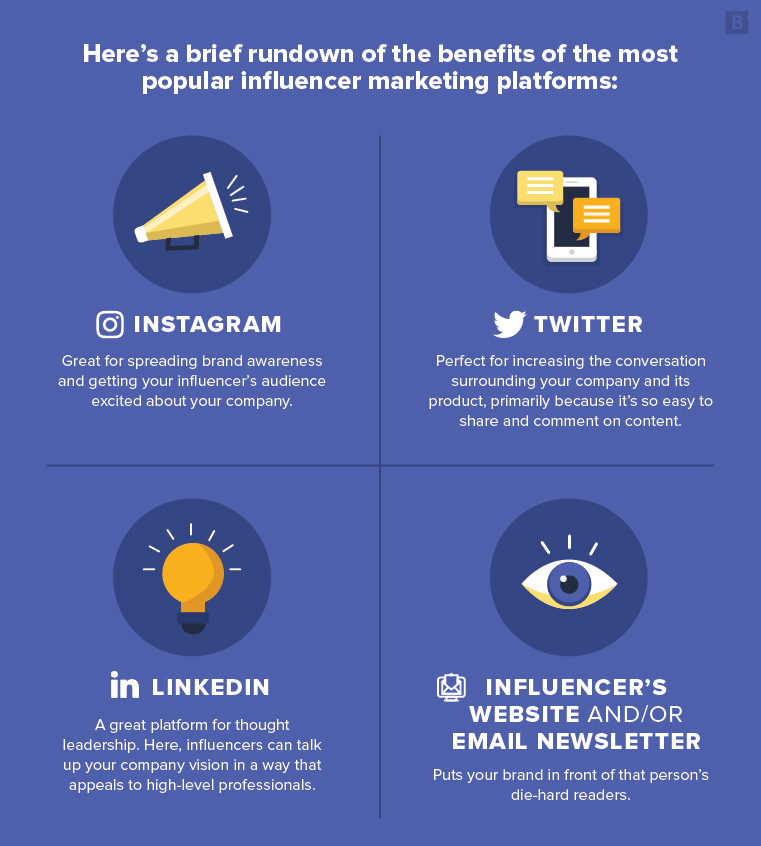
If you’re working with several social media ambassadors, you might be tracking how many new customers have used their referral code. Or, if you chose a celebrity to act as the face of your brand, you can see if you’re getting the number of media placements you desired.
What is a Brand Ambassador in Your World?
Given how broad the brand ambassador umbrella can be, it can be tempting to cram a lot of ideas and ideal partners into your approach. On the flip side, the endless possibilities can cause a little analysis paralysis and keep you in your marketing comfort zone.
Starting with a focused, small-scale program is a low-stakes way to see how you can leverage brand ambassador partnerships to build your business.
As the saying goes, a rising tide lifts all boats. With brand ambassadors at your side, you’ll get to experience just how awesome it is to collaborate with like-minded creatives and grow together.
Editor’s Note: Updated May 2026.